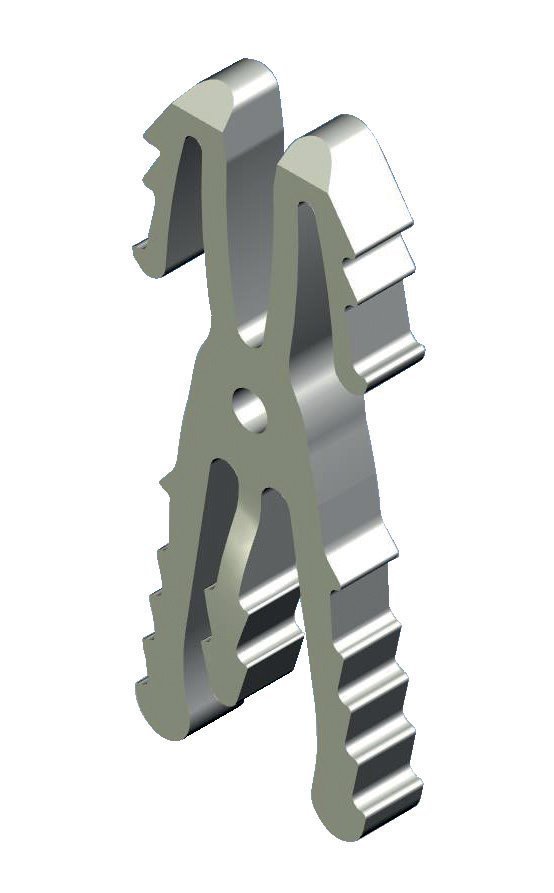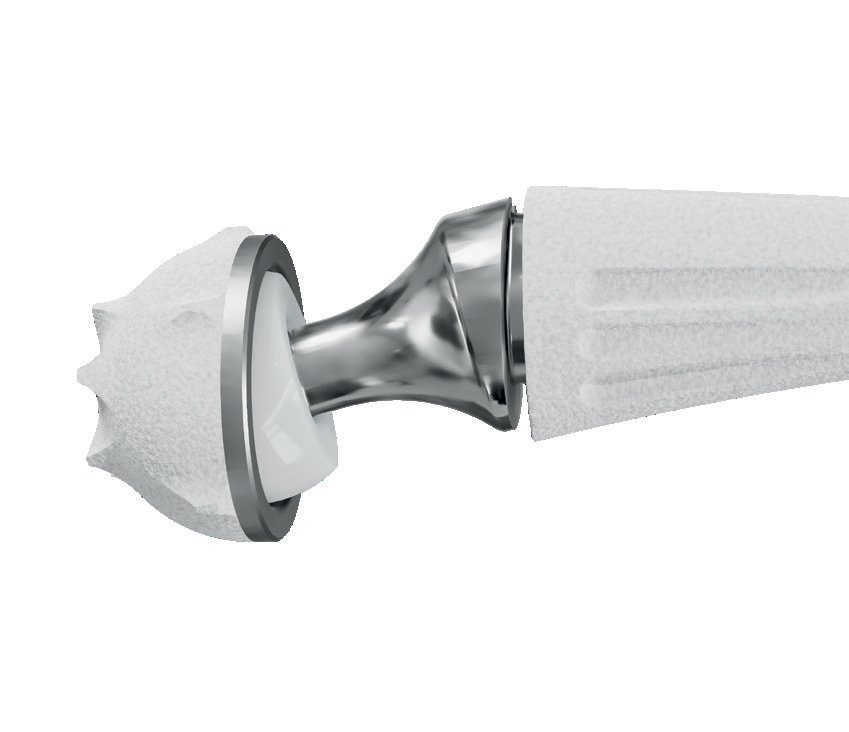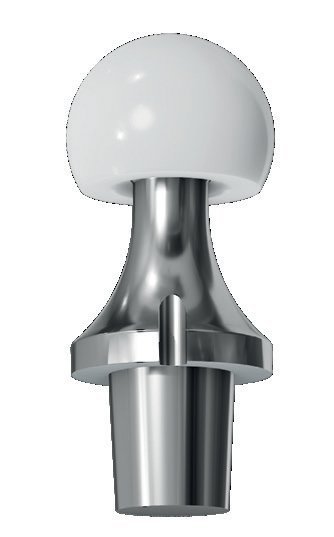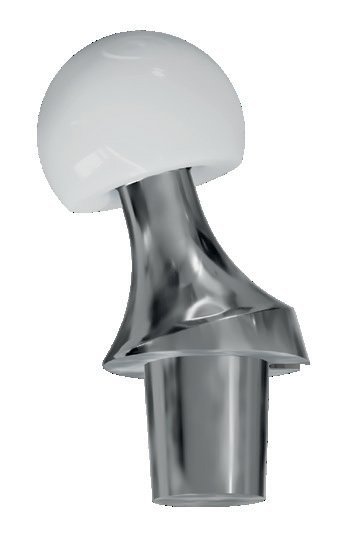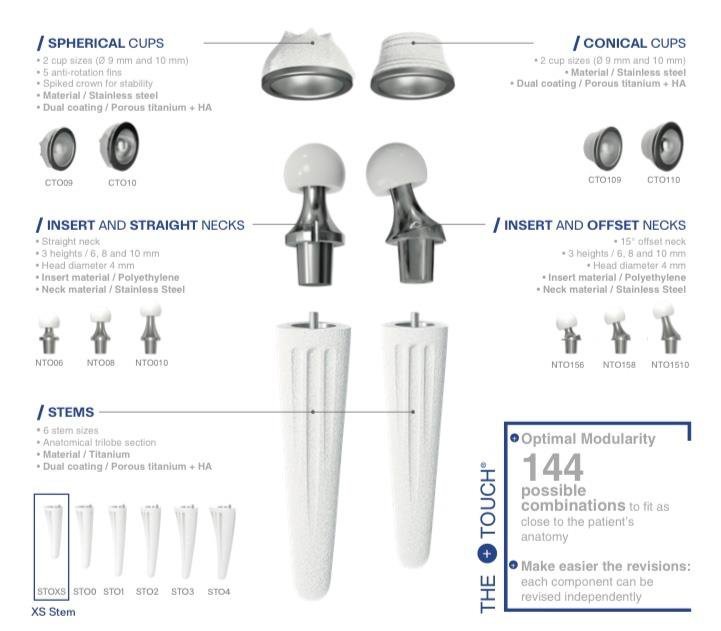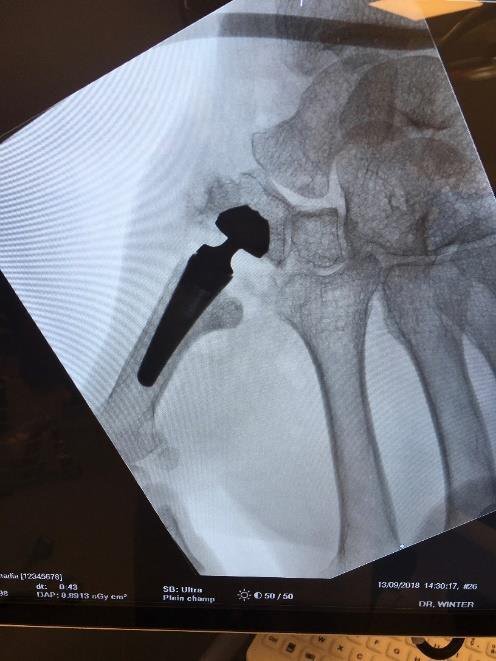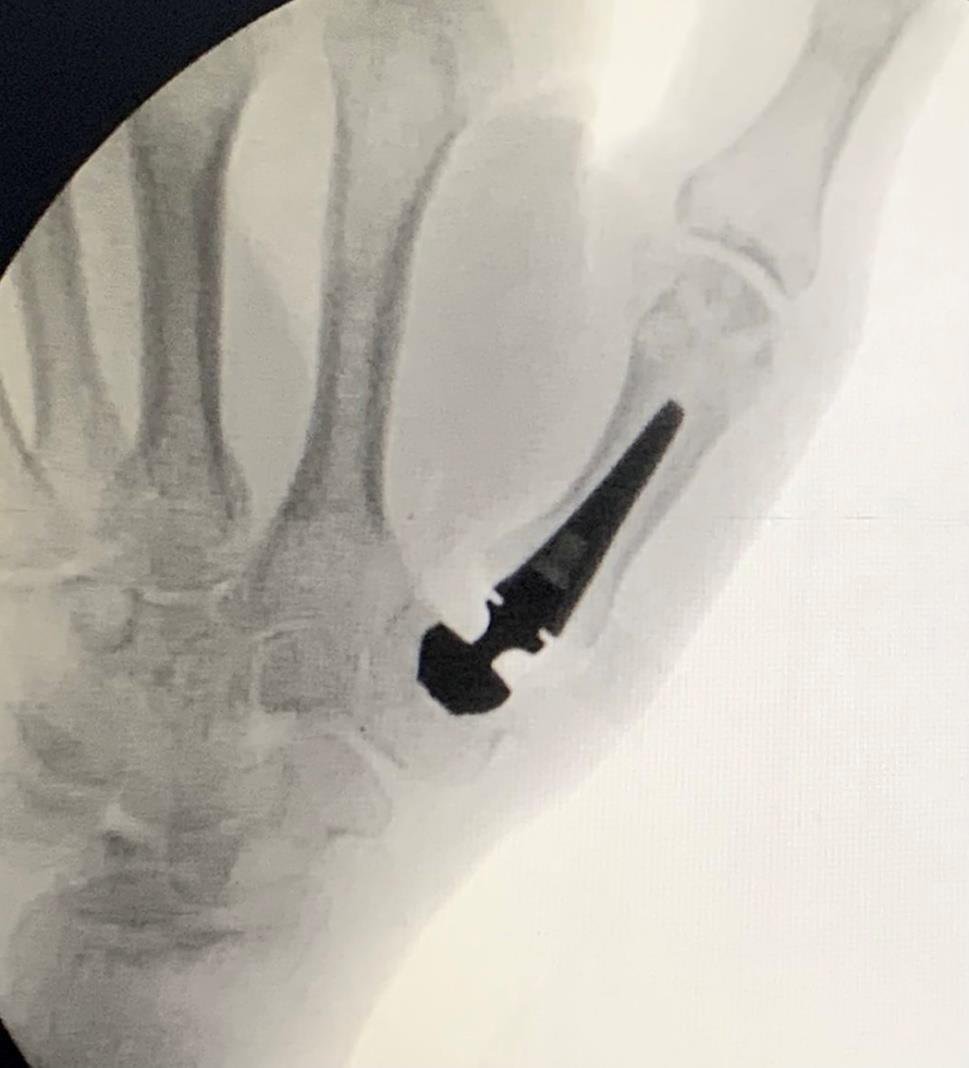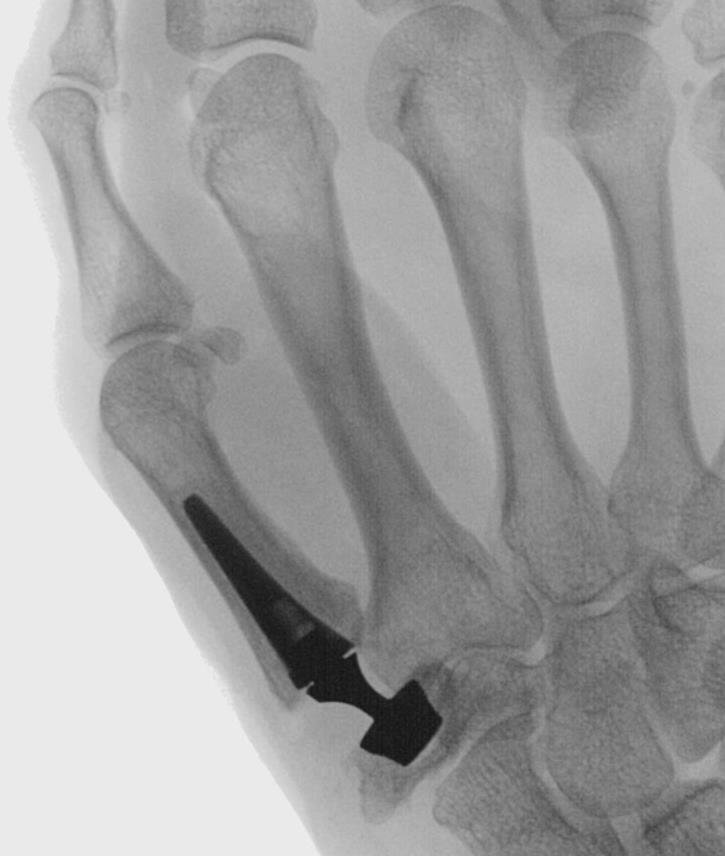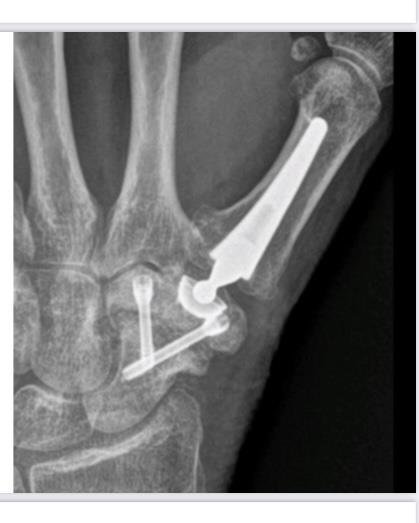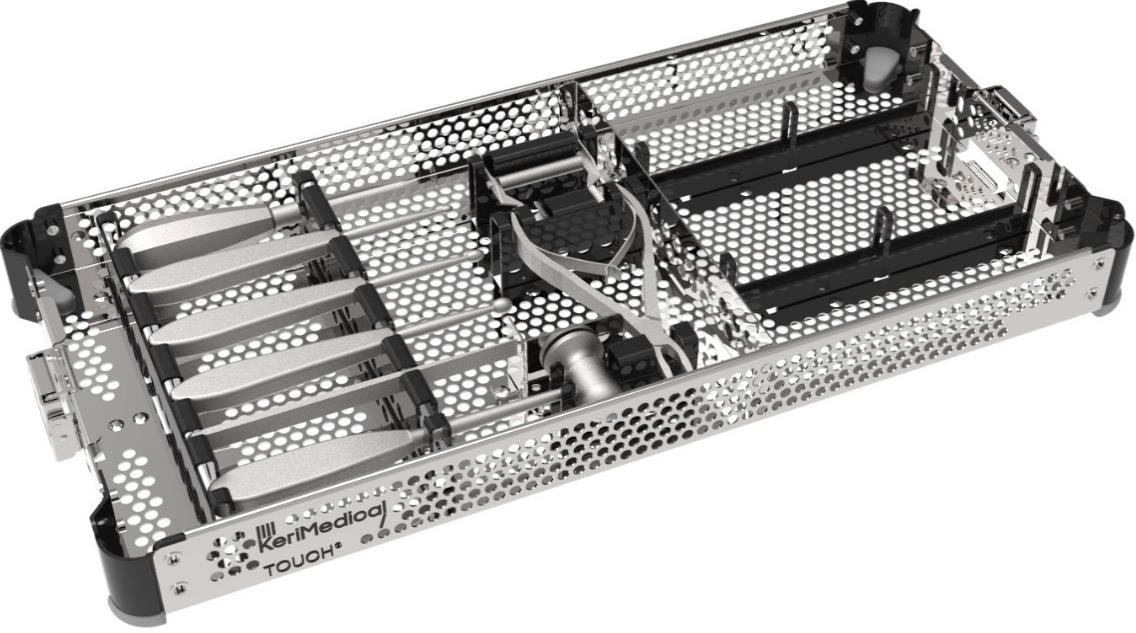
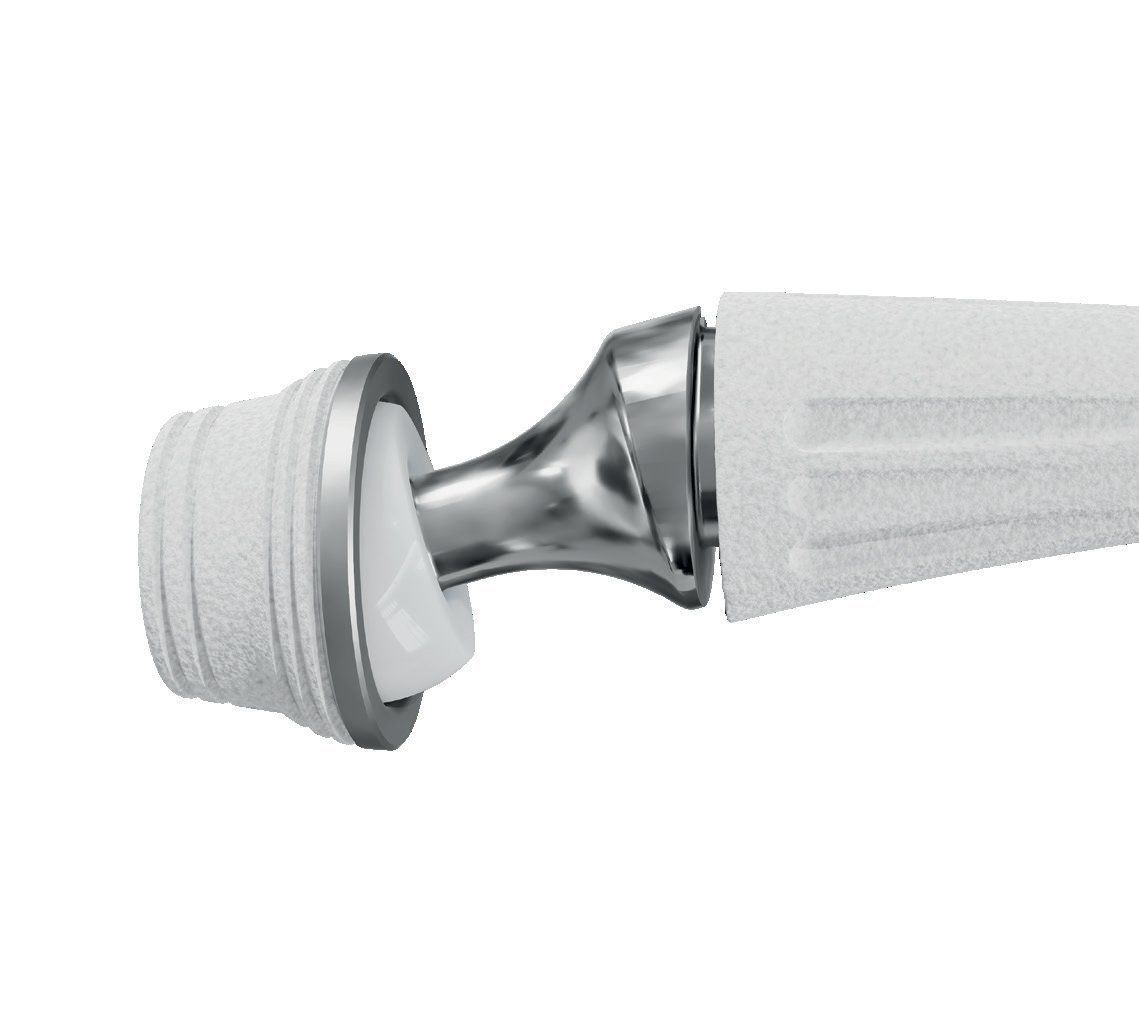
Touch CMC prosthesis, exploded view of the cup, stem and ball components

Hand & Wrist · Dual-Mobility CMC

Touch® CMC Prosthesis

Dual-mobility trapeziometacarpal joint prosthesis for thumb-base osteoarthritis. Highly cross-linked polyethylene liner, spherical and conical cup options, 144 implant configurations, and a 116° mobility cone. Purpose-built for CMC arthroplasty, not a repurposed hip mini-implant. CE-marked Class III under EU MDR 2017/745 (notified body 2862), continuously since 2015. GESY-covered in Cyprus through OrganoGEN.

Manufactured by KeriMedical SA (Medartis Group) (Geneva, Switzerland) · Distributed in Cyprus by OrganoGEN Limited

144Configurations
(6 stems × 4 cups × 6 necks)
0.5%Dislocation rate
(vs 4.2% Arpe, P=0.02)
116°Mobility cone
(dual-mobility design)
5–8 yrProspective
follow-up data published
verifiedGESY-CoveredscienceDual-Mobility + HXLPEpublicCE-Marked Class IIIsupport_agentSurgical Support

In One Paragraph

The Touch® CMC Prosthesis is a dual-mobility trapeziometacarpal joint implant for thumb-base osteoarthritis (rhizarthrosis), manufactured by KeriMedical in Geneva, part of the Medartis Group. The construct combines a titanium anatomical trilobe stem (Titanium + hydroxyapatite dual coating), stainless steel cups in spherical and conical shapes (also dual-coated), and a highly cross-linked polyethylene (HXLPE) liner. 144 implant configurations (6 stems × 4 cup options × 6 neck options) let the surgeon match anatomy intra-operatively from a single tray. The dual-mobility design distributes motion across two articular surfaces and delivers a 116° mobility cone, greater than the native CMC joint. Comparative evidence reports a 0.5% dislocation rate versus 4.2% with the legacy single-mobility Arpe implant (P=0.02, Reyniers 2025), and a prospective series of 107 cases with more than 3-year follow-up reported zero dislocations (Lussiez 2021). CE-marked Class III under EU MDR 2017/745 (notified body 2862), continuously since 2015; MDR certification valid through 15 February 2028. Also FDA PMA-approved (P240020, 10 July 2025). GESY-covered in Cyprus through OrganoGEN.

Overview

The Touch® CMC Prosthesis is a dual-mobility implant for the surgical treatment of trapeziometacarpal (CMC) osteoarthritis, the form of arthritis at the base of the thumb most commonly known as rhizarthrosis. The dual-mobility configuration, borrowed from total hip arthroplasty, distributes motion across two articular surfaces and is the principal reason its published dislocation rate sits below 1%. By design the Touch® prosthesis delivers a 116° mobility cone, greater than the native CMC joint, with motion distributed symmetrically when the cup is positioned in the reference orientation.

KeriMedical, the Swiss manufacturer, has built the Touch® system around 144 implant configurations. The combinatorial breakdown is: 6 stem sizes (anatomical trilobe titanium stems with a titanium and hydroxyapatite dual coating), two cup shapes (spherical or conical, in two diameters of 9 mm and 10 mm, stainless steel with the same titanium and hydroxyapatite dual coating), and six neck options (three heights of 6 mm, 8 mm and 10 mm in either straight or 15° offset configurations). The mobile bearing is a highly cross-linked polyethylene (HXLPE) liner with a 4 mm head diameter. The implant is purpose-designed for the trapeziometacarpal joint, not a repurposed hip mini-prosthesis. Touch® is the first CMC1 prosthesis on the market to offer both spherical and conical cup options, and the first dual-mobility CMC1 prosthesis to use a highly cross-linked polyethylene liner.

Touch® is CE-marked Class III under EU MDR 2017/745 (notified body 2862), continuously since 2015; current MDR certification is valid through 15 February 2028. The implant is GESY-covered in Cyprus when implanted by a participating hand surgeon at a GESY-contracted hospital. (Touch® also holds FDA Premarket Approval P240020, granted 10 July 2025 - relevant as an additional regulatory credential, not a primary positioning point for the Cypriot market.) KeriMedical has been part of the Medartis Group since July 2025 and operates as a distinct hand-and-wrist brand within the group.

OrganoGEN is the exclusive Cyprus distributor and provides surgical support at every implantation.

Indications & Contraindications

check_circleIndicated For

  • Trapeziometacarpal (CMC) osteoarthritis (rhizarthrosis)
  • Painful CMC instability after failed conservative therapy of at least six months
  • Post-traumatic CMC arthritis with preserved trapezium height
  • Revision of failed trapeziectomy with adequate bone stock

blockContraindicated For

  • Active local or systemic infection
  • Insufficient trapezial bone stock
  • Skeletal immaturity
  • Patient unable to comply with the post-operative protocol

Technical Specifications

ManufacturerKeriMedical SA, Geneva, Switzerland (Medartis Group since July 2025)
Configurations144 total (6 stems × 4 cup options × 6 neck options)
StemTitanium, anatomical trilobe section, dual coating (Titanium + hydroxyapatite). 6 sizes (XS, 0, 1, 2, 3, 4)
CupsStainless steel with dual coating (Titanium + hydroxyapatite). Two shapes (spherical, conical), two diameters (Ø9 mm and Ø10 mm). 4 total cup references
LinerHighly cross-linked polyethylene (HXLPE)
Neck and headStainless steel. 3 heights (6 mm, 8 mm, 10 mm) in straight or 15° offset configurations. Head diameter 4 mm
ArticulationDual-mobility, 116° mobility cone
Regulatory (EU)CE-marked Class III, EU MDR 2017/745, notified body 2862. Continuously CE-marked since 2015. MDR certification valid through 15 February 2028
Regulatory (US)FDA PMA P240020, 10 July 2025
Distribution in CyprusOrganoGEN Limited (exclusive)
GESY reimbursementApproved (active ZC code)

Clinical evidence

Reyniers et al. 2025

Comparative series. 0.5% dislocation with Touch® dual-mobility versus 4.2% with the legacy Arpe single-mobility implant (P=0.02).

PubMed 41015915
Lussiez et al. 2021

Prospective study of 107 cases with minimum 3-year follow-up. Pain VAS dropped from 7.4 to 0.8 (p<0.001), Kapandji opposition score from 8.0 to 9.4, QuickDASH from 38 to 20 (p<0.01), key-pinch strength from 3.5 kg to 5.5 kg. 95% of patients very satisfied or satisfied. Zero dislocations at minimum 3-year follow-up.

J Hand Surg Eur Vol 2021;46(9):961-967
Gonzalez-Espino et al. 2021

Retrospective series of 92 prostheses. No major complications (dislocation, fracture or loosening). Functional QuickDASH scores not significantly different from age-matched general population. Mean return to work 2.6 months.

Hand Surg Rehabil 2021;40(6):760-764
Herren et al. 2023

Prospective cohort, 130 patients. 96% implant survival at 2 years.

PubMed 37310049
KeriMedical clinical dossier

More than 30 Touch®-specific peer-reviewed publications and conference abstracts, including five-to-eight-year prospective follow-up data and a 150-prosthesis series at four years. Full bibliography available to qualifying surgeons on request.

Manufacturer documentation

GESY Coverage & Pricing in Cyprus

The Touch® CMC Prosthesis is GESY-covered under an active ZC code. When implanted by a participating hand surgeon at a GESY-contracted hospital, the device cost is included in the hospital reimbursement, and patients are not billed separately for the implant.

For self-pay or international patients, OrganoGEN provides hospital quotations on request. We do not publish list prices. Request a quote with your hospital's procurement details.

Frequently asked questions

Is the Touch® CMC Prosthesis covered by GESY in Cyprus?
Yes. The Touch® CMC Prosthesis is approved for GESY reimbursement when implanted by a participating hand surgeon at a GESY-contracted hospital. The implant cost is included in the hospital reimbursement.
Who manufactures the Touch® CMC Prosthesis?
KeriMedical SA in Geneva, Switzerland. KeriMedical was founded by hand surgeons and has been part of the Medartis Group since July 2025, operating as a distinct hand-and-wrist brand within the group. OrganoGEN is the exclusive distributor in Cyprus.
What is the dislocation rate of the Touch® CMC Prosthesis?
Comparative published evidence reports a 0.5% dislocation rate with the dual-mobility Touch® implant versus 4.2% with the legacy single-mobility Arpe implant (P=0.02, Reyniers et al. 2025, PubMed 41015915). A separate prospective study of 107 cases with more than three years of follow-up reported zero dislocations (Lussiez et al. 2021, J Hand Surg Eur Vol 46(9):961-967).
Is the Touch® implant CE-marked?
Yes. Touch® is CE-marked Class III under EU MDR 2017/745 (notified body 2862). KeriMedical has held continuous CE certification since 2015; the current MDR certificate is valid through 15 February 2028. Touch® additionally holds FDA Premarket Approval P240020 (10 July 2025) for the US market - a useful credential, not a primary positioning point for Cyprus.
Why are 144 configurations needed?
Trapeziometacarpal anatomy varies significantly between patients. The Touch® system combines 6 stem sizes, two cup shapes (spherical and conical) in two diameters, and six neck options (three heights, straight or 15° offset), yielding 144 total configurations. The surgeon matches the implant to anatomy intra-operatively from a single tray rather than committing to a fixed configuration at templating.
What is the polyethylene liner made of and why does it matter?
The Touch® liner is highly cross-linked polyethylene (HXLPE), the same polymer technology used in modern total hip replacements for improved wear resistance. KeriMedical bench testing shows the HXLPE liner retains 97.5% of its volume after 5 million test cycles (approximately ten years of regular thumb usage) compared with 91.1% for standard polyethylene. Touch® is the first dual-mobility CMC1 prosthesis to use HXLPE. Bench testing is not necessarily indicative of clinical performance, but five-to-eight-year prospective clinical follow-up data is published.
What functional improvement do patients see after Touch® CMC arthroplasty?
In the largest published prospective Touch® series with more than three years of follow-up, mean pain on a 0 to 10 visual analogue scale dropped from 7.4 to 0.8, the Kapandji thumb-opposition score improved from 8.0 to 9.4, the QuickDASH disability score improved from 38 to 20, and key-pinch strength increased from 3.5 kg to 5.5 kg. 95% of patients reported being very satisfied or satisfied with the functional outcome (Lussiez et al. 2021). A separate 92-prosthesis series reported mean return to work at 2.6 months (Gonzalez-Espino et al. 2021).
Where can patients have Touch® CMC arthroplasty in Cyprus?
OrganoGEN supplies the Touch® system to GESY-contracted hospitals across Cyprus. Contact us for the current list of participating hand surgeons in Limassol, Nicosia, Larnaca, Paphos, and Famagusta.

More in Hand & Wrist

Other products OrganoGEN distributes in the Hand & Wrist category.
arrow_back
Touch® CMC Prosthesis
Hand & Wrist · Dual-Mobility CMC

Touch® CMC Prosthesis

Dual-mobility trapeziometacarpal joint prosthesis for thumb-base osteoarthritis. Highly cross-linked polyethylene liner, spherical and conical cup options, 144 implant configurations, and a 116° mobility cone. Purpose-built for CMC arthroplasty, not a repurposed hip mini-implant. CE-marked Class III under EU MDR 2017/745 (notified body 2862), continuously since 2015. GESY-covered in Cyprus through OrganoGEN.

verifiedGESY-CoveredscienceDual-Mobility + HXLPEpublicCE-Marked Class IIIsupport_agentSurgical Support
Touch CMC prosthesis, exploded view of the cup, stem and ball components
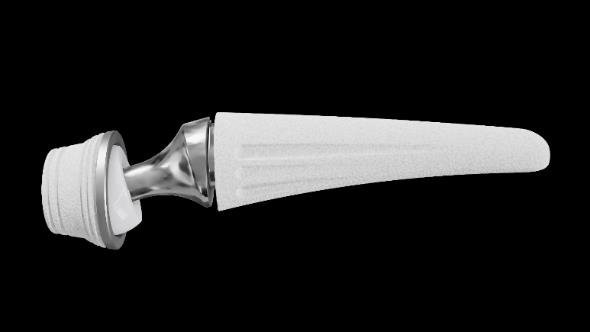
Touch CMC prosthesis, assembled implant
Touch CMC dual-mobility prosthesis, assembled implant
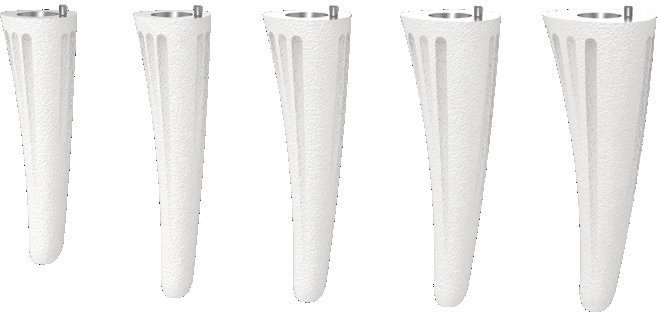
Touch CMC prosthesis stems, full size range
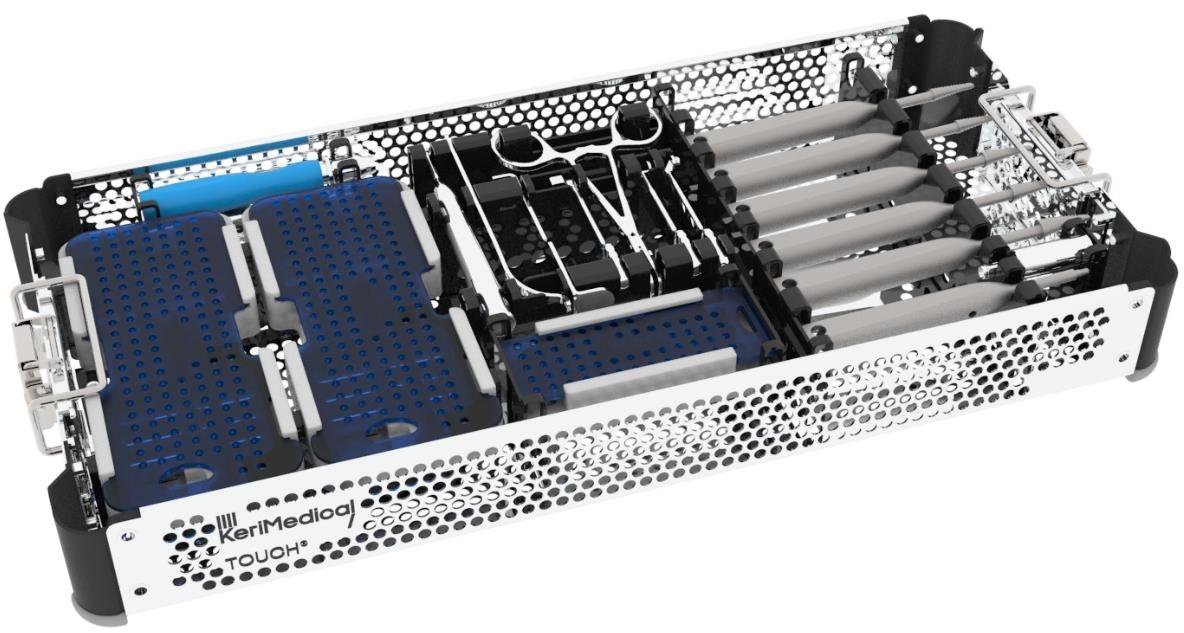
Touch CMC prosthesis instrument tray
Touch CMC prosthesis, post-operative X-ray of the thumb base
Touch CMC prosthesis, modular component range
Touch CMC prosthesis, post-operative hand X-ray
Touch CMC prosthesis stem in the metacarpal, post-operative X-ray
Touch CMC prosthesis, post-operative X-ray of the stem and cup
Touch CMC prosthesis, post-operative X-ray at the thumb base joint
Touch CMC prosthesis surgical instrument tray
Touch CMC prosthesis instrument set, loaded tray

In One Paragraph

The Touch® CMC Prosthesis is a dual-mobility trapeziometacarpal joint implant for thumb-base osteoarthritis (rhizarthrosis), manufactured by KeriMedical in Geneva, part of the Medartis Group. The construct combines a titanium anatomical trilobe stem (Titanium + hydroxyapatite dual coating), stainless steel cups in spherical and conical shapes (also dual-coated), and a highly cross-linked polyethylene (HXLPE) liner. 144 implant configurations (6 stems × 4 cup options × 6 neck options) let the surgeon match anatomy intra-operatively from a single tray. The dual-mobility design distributes motion across two articular surfaces and delivers a 116° mobility cone, greater than the native CMC joint. Comparative evidence reports a 0.5% dislocation rate versus 4.2% with the legacy single-mobility Arpe implant (P=0.02, Reyniers 2025), and a prospective series of 107 cases with more than 3-year follow-up reported zero dislocations (Lussiez 2021). CE-marked Class III under EU MDR 2017/745 (notified body 2862), continuously since 2015; MDR certification valid through 15 February 2028. Also FDA PMA-approved (P240020, 10 July 2025). GESY-covered in Cyprus through OrganoGEN.

Overview

Overview

The Touch® CMC Prosthesis is a dual-mobility implant for the surgical treatment of trapeziometacarpal (CMC) osteoarthritis, the form of arthritis at the base of the thumb most commonly known as rhizarthrosis. The dual-mobility configuration, borrowed from total hip arthroplasty, distributes motion across two articular surfaces and is the principal reason its published dislocation rate sits below 1%. By design the Touch® prosthesis delivers a 116° mobility cone, greater than the native CMC joint, with motion distributed symmetrically when the cup is positioned in the reference orientation.

KeriMedical, the Swiss manufacturer, has built the Touch® system around 144 implant configurations. The combinatorial breakdown is: 6 stem sizes (anatomical trilobe titanium stems with a titanium and hydroxyapatite dual coating), two cup shapes (spherical or conical, in two diameters of 9 mm and 10 mm, stainless steel with the same titanium and hydroxyapatite dual coating), and six neck options (three heights of 6 mm, 8 mm and 10 mm in either straight or 15° offset configurations). The mobile bearing is a highly cross-linked polyethylene (HXLPE) liner with a 4 mm head diameter. The implant is purpose-designed for the trapeziometacarpal joint, not a repurposed hip mini-prosthesis. Touch® is the first CMC1 prosthesis on the market to offer both spherical and conical cup options, and the first dual-mobility CMC1 prosthesis to use a highly cross-linked polyethylene liner.

Clinical Use

Indications & Contraindications

check_circleIndicated for

  • Trapeziometacarpal (CMC) osteoarthritis (rhizarthrosis)
  • Painful CMC instability after failed conservative therapy of at least six months
  • Post-traumatic CMC arthritis with preserved trapezium height
  • Revision of failed trapeziectomy with adequate bone stock

cancelContraindicated

  • Active local or systemic infection
  • Insufficient trapezial bone stock
  • Skeletal immaturity
  • Patient unable to comply with the post-operative protocol
Technical

Technical Specifications

Manufacturer
KeriMedical SA, Geneva, Switzerland (Medartis Group since July 2025)
Configurations
144 total (6 stems × 4 cup options × 6 neck options)
Stem
Titanium, anatomical trilobe section, dual coating (Titanium + hydroxyapatite). 6 sizes (XS, 0, 1, 2, 3, 4)
Cups
Stainless steel with dual coating (Titanium + hydroxyapatite). Two shapes (spherical, conical), two diameters (Ø9 mm and Ø10 mm). 4 total cup references
Liner
Highly cross-linked polyethylene (HXLPE)
Neck and head
Stainless steel. 3 heights (6 mm, 8 mm, 10 mm) in straight or 15° offset configurations. Head diameter 4 mm
Articulation
Dual-mobility, 116° mobility cone
Regulatory (EU)
CE-marked Class III, EU MDR 2017/745, notified body 2862. Continuously CE-marked since 2015. MDR certification valid through 15 February 2028
Regulatory (US)
FDA PMA P240020, 10 July 2025
Distribution in Cyprus
OrganoGEN Limited (exclusive)
GESY reimbursement
Approved (active ZC code)
Evidence

Clinical evidence

Reyniers et al. 2025 Comparative series. 0.5% dislocation with Touch® dual-mobility versus 4.2% with the legacy Arpe single-mobility implant (P=0.02). PubMed 41015915
Lussiez et al. 2021 Prospective study of 107 cases with minimum 3-year follow-up. Pain VAS dropped from 7.4 to 0.8 (p<0.001), Kapandji opposition score from 8.0 to 9.4, QuickDASH from 38 to 20 (p<0.01), key-pinch strength from 3.5 kg to 5.5 kg. 95% of patients very satisfied or satisfied. Zero dislocations at minimum 3-year follow-up. J Hand Surg Eur Vol 2021;46(9):961-967
Gonzalez-Espino et al. 2021 Retrospective series of 92 prostheses. No major complications (dislocation, fracture or loosening). Functional QuickDASH scores not significantly different from age-matched general population. Mean return to work 2.6 months. Hand Surg Rehabil 2021;40(6):760-764
Herren et al. 2023 Prospective cohort, 130 patients. 96% implant survival at 2 years. PubMed 37310049
KeriMedical clinical dossier More than 30 Touch®-specific peer-reviewed publications and conference abstracts, including five-to-eight-year prospective follow-up data and a 150-prosthesis series at four years. Full bibliography available to qualifying surgeons on request. Manufacturer documentation
GESY & Cost

GESY Coverage & Pricing in Cyprus

The Touch® CMC Prosthesis is GESY-covered under an active ZC code. When implanted by a participating hand surgeon at a GESY-contracted hospital, the device cost is included in the hospital reimbursement, and patients are not billed separately for the implant.

For self-pay or international patients, OrganoGEN provides hospital quotations on request. We do not publish list prices. Request a quote with your hospital's procurement details.

FAQ

Frequently asked questions

Is the Touch® CMC Prosthesis covered by GESY in Cyprus?
Yes. The Touch® CMC Prosthesis is approved for GESY reimbursement when implanted by a participating hand surgeon at a GESY-contracted hospital. The implant cost is included in the hospital reimbursement.
Who manufactures the Touch® CMC Prosthesis?
KeriMedical SA in Geneva, Switzerland. KeriMedical was founded by hand surgeons and has been part of the Medartis Group since July 2025, operating as a distinct hand-and-wrist brand within the group. OrganoGEN is the exclusive distributor in Cyprus.
What is the dislocation rate of the Touch® CMC Prosthesis?
Comparative published evidence reports a 0.5% dislocation rate with the dual-mobility Touch® implant versus 4.2% with the legacy single-mobility Arpe implant (P=0.02, Reyniers et al. 2025, PubMed 41015915). A separate prospective study of 107 cases with more than three years of follow-up reported zero dislocations (Lussiez et al. 2021, J Hand Surg Eur Vol 46(9):961-967).
Is the Touch® implant CE-marked?
Yes. Touch® is CE-marked Class III under EU MDR 2017/745 (notified body 2862). KeriMedical has held continuous CE certification since 2015; the current MDR certificate is valid through 15 February 2028. Touch® additionally holds FDA Premarket Approval P240020 (10 July 2025) for the US market - a useful credential, not a primary positioning point for Cyprus.
Why are 144 configurations needed?
Trapeziometacarpal anatomy varies significantly between patients. The Touch® system combines 6 stem sizes, two cup shapes (spherical and conical) in two diameters, and six neck options (three heights, straight or 15° offset), yielding 144 total configurations. The surgeon matches the implant to anatomy intra-operatively from a single tray rather than committing to a fixed configuration at templating.
What is the polyethylene liner made of and why does it matter?
The Touch® liner is highly cross-linked polyethylene (HXLPE), the same polymer technology used in modern total hip replacements for improved wear resistance. KeriMedical bench testing shows the HXLPE liner retains 97.5% of its volume after 5 million test cycles (approximately ten years of regular thumb usage) compared with 91.1% for standard polyethylene. Touch® is the first dual-mobility CMC1 prosthesis to use HXLPE. Bench testing is not necessarily indicative of clinical performance, but five-to-eight-year prospective clinical follow-up data is published.
What functional improvement do patients see after Touch® CMC arthroplasty?
In the largest published prospective Touch® series with more than three years of follow-up, mean pain on a 0 to 10 visual analogue scale dropped from 7.4 to 0.8, the Kapandji thumb-opposition score improved from 8.0 to 9.4, the QuickDASH disability score improved from 38 to 20, and key-pinch strength increased from 3.5 kg to 5.5 kg. 95% of patients reported being very satisfied or satisfied with the functional outcome (Lussiez et al. 2021). A separate 92-prosthesis series reported mean return to work at 2.6 months (Gonzalez-Espino et al. 2021).
Where can patients have Touch® CMC arthroplasty in Cyprus?
OrganoGEN supplies the Touch® system to GESY-contracted hospitals across Cyprus. Contact us for the current list of participating hand surgeons in Limassol, Nicosia, Larnaca, Paphos, and Famagusta.
More in Hand & Wrist

Related products