
Trauma & Reconstruction · Cyprus

Internal Osteosynthesis

Plate-and-screw fixation of fractures and osteotomies using the Hofer INTEOS® anatomically pre-contoured locking plate system, with ±35° variable-angle locking. Comprehensive coverage of the upper and lower extremity. GESY-covered.

Quick Answers

What is internal osteosynthesis?

It is the surgical fixation of a fracture or osteotomy using a plate fixed to the bone with screws. The plate restores anatomical alignment and provides stable fixation, allowing the patient to begin functional rehabilitation early rather than waiting in a cast for the fracture to consolidate.

Why use an anatomically pre-contoured plate rather than a generic one?

Anatomical plates are shaped to match the native curvature of the bone they fix. The surgeon spends less operating time bending the plate, the implant sits closer to the bone surface (which reduces soft-tissue irritation), and screw trajectories are pre-aligned with the safe corridors of the bone.

What is INTEOS®Lock and why does it matter?

INTEOS®Lock is the Hofer Medical Solutions variable-angle locking interface used across the INTEOS® plate range. Each locking screw can be angled within a ±35° cone (70° total range) around the plate hole while retaining full angular stability.

What does the published evidence show?

Hofer INTEOS®-specific peer-reviewed clinical series have not yet been published. The implant sits within the broader variable-angle and anatomical locking-plate class, where the published evidence is mature.

What is Internal Osteosynthesis?

Also known as: Plate and screw fixation, Open Reduction and Internal Fixation (ORIF), Locking plate fixation, Compression plate fixation, Anatomical locking plate, INTEOS®Lock variable-angle locking, Fracture fixation surgery, Anatomical plate osteosynthesis

Internal osteosynthesis is the surgical fixation of a fracture or osteotomy using a plate applied to the surface of the bone and screws that secure it. The goal is to restore the bone's anatomical alignment and hold it stable enough that the patient can begin functional rehabilitation early, instead of waiting weeks in a cast for the fracture to consolidate on its own. It is the workhorse of orthopaedic trauma surgery and the default operative treatment for most displaced fractures of the upper and lower extremity.

In Cyprus, OrganoGEN is the exclusive distributor of Hofer Medical Solutions (Fürstenfeld, Austria), supplying the INTEOS® anatomically pre-contoured plate system and the OSTYS® compression and cannulated screw range. The system covers the full extremity skeleton in matched anatomical shapes across four compatible tiers (XS, S, M, L), so the plate sits on the bone in its native curvature with minimal intra-operative bending and the surgeon can move between adjacent fragment sizes within a single tray.

The defining technical feature is INTEOS®Lock: a variable-angle locking interface that lets the surgeon angle each screw within a ±35° cone (70° total range) around each plate hole, while preserving full angular stability. This matters around articular surfaces, comminuted fragments, and bone of variable density, where the ideal screw trajectory is rarely the one a fixed-angle plate would dictate. The thread geometry is also engineered to virtually eliminate cold fusion (the screw-to-plate cold-welding that complicates hardware removal in some titanium locking systems), and Hofer's post-market clinical follow-up reports a 98% rate of smooth screw-to-plate release.

All implants are titanium, manufactured under MDR 2017/745, ISO 13485, ISO 9001, and ISO 14001 certifications, with 95% in-house production at Fürstenfeld, Austria, and a 24/7 service hotline for surgical-set replenishment. INTEOS® was launched in 2012, OSTYS® in 2018, and the distal Tibia System in 2024, the latest of more than two decades of trauma-osteosynthesis development from Styria.

📋 Procedure at a Glance

Implant
Hofer INTEOS® plates and OSTYS® screws
Material
Titanium
Locking
INTEOS®Lock, ±35° variable-angle (70° cone)
System tiers
XS, S, M, L (matched to bone size)
Coverage
Upper and lower extremity, hand, foot
Anaesthesia
Region-specific
Hospital stay
Day case to short stay
GESY
Approved

Am I a candidate?

Good candidates

  • Displaced fractures of the upper or lower extremity where reduction cannot be maintained by closed means
  • Intra-articular fractures requiring anatomical reduction
  • Open fractures requiring stabilisation after debridement
  • Selected non-unions and malunions amenable to plate fixation
  • Osteotomies requiring rigid internal fixation
  • Patients who benefit from early functional rehabilitation rather than prolonged immobilisation

Patients in whom another option may be preferred

  • Active infection at the planned implant site
  • Severely compromised soft-tissue envelope where temporary external fixation is preferred first
  • Bone stock or fracture pattern better suited to intramedullary nailing or external fixation
  • Patient-specific contraindications to elective orthopaedic surgery

GESY coverage & out-of-pocket cost

For Cyprus residents enrolled in GESY, internal osteosynthesis with Hofer INTEOS® plates and OSTYS® screws is fully covered when performed by a participating surgeon at a GESY-contracted hospital. The Hofer portfolio is GESY-covered across the upper and lower extremity. The cost of the implant is included in the hospital reimbursement and patients are not billed separately for the plate or screws.

For self-pay or international patients, OrganoGEN provides hospital quotations on request. Request a quote.

Devices used in this procedure
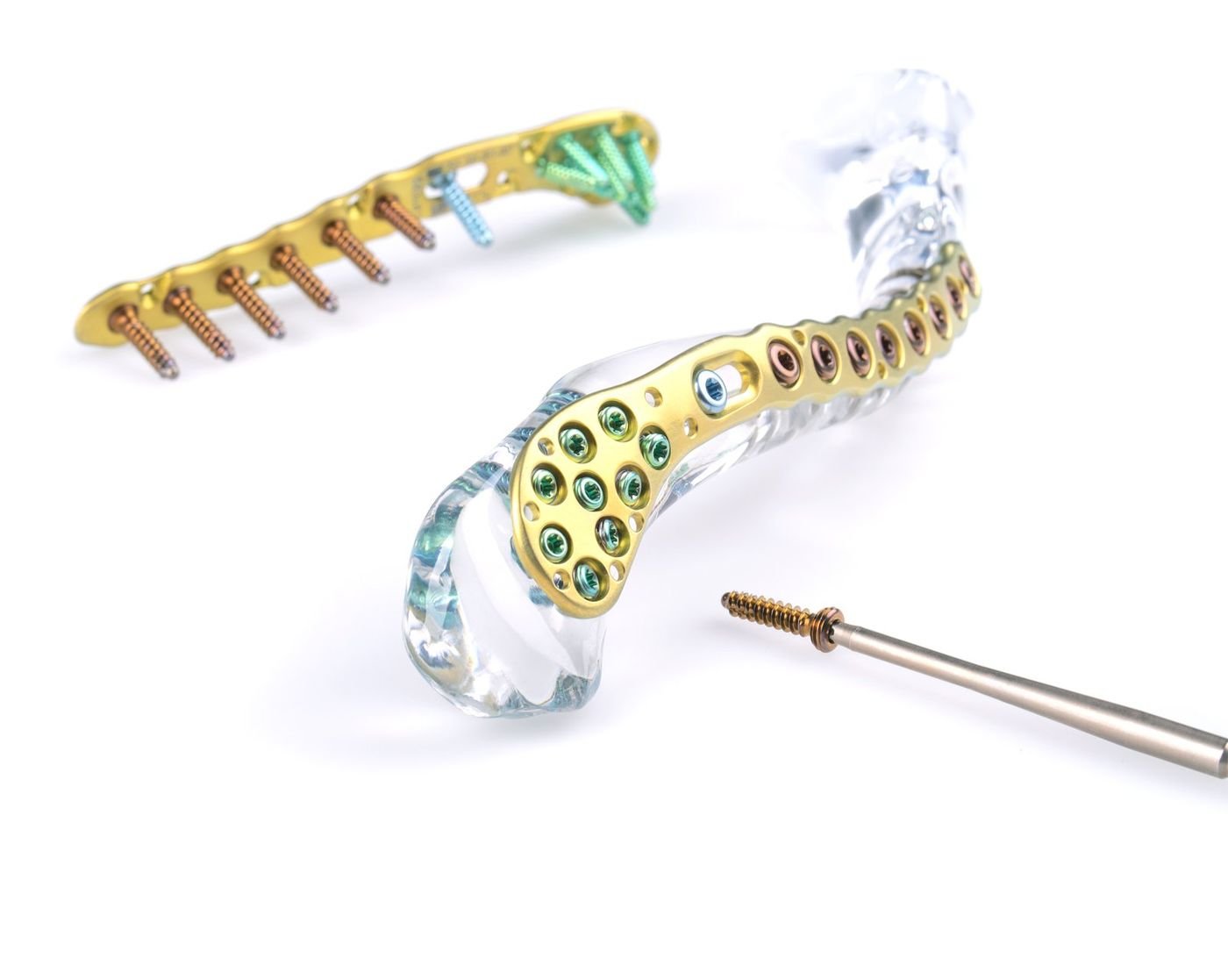
Hofer Osteosynthesis Locking-Plate SystemOrthopaedics & Trauma · Locking Plateschevron_right

Where to have Internal Osteosynthesis in Cyprus

OrganoGEN supplies GESY-contracted hospitals across the island. Contact us for the current list of participating surgeons in:

Talk to a surgeon in Cyprus

OrganoGEN can connect you with a participating GESY-contracted surgeon for a consultation.

Request Referral

Frequently asked questions

What is internal osteosynthesis?
It is the surgical fixation of a fracture or osteotomy using a plate fixed to the bone with screws. The plate restores anatomical alignment and provides stable fixation, allowing the patient to begin functional rehabilitation early rather than waiting in a cast for the fracture to consolidate.
Why use an anatomically pre-contoured plate rather than a generic one?
Anatomical plates are shaped to match the native curvature of the bone they fix. The surgeon spends less operating time bending the plate, the implant sits closer to the bone surface (which reduces soft-tissue irritation), and screw trajectories are pre-aligned with the safe corridors of the bone. For thin-skin regions like the clavicle, distal fibula, and distal radius, the lower profile is felt by the patient as well.
What is INTEOS®Lock and why does it matter?
INTEOS®Lock is the Hofer Medical Solutions variable-angle locking interface used across the INTEOS® plate range. Each locking screw can be angled within a ±35° cone (70° total range) around the plate hole while retaining full angular stability. This matters when the ideal screw trajectory is dictated by a fragment, an articular surface, or a zone of stronger bone, rather than by the plate. The thread geometry is also engineered to eliminate cold fusion, the screw-to-plate cold-welding that can complicate hardware removal in some titanium locking systems. Hofer's post-market clinical follow-up reports a 98% rate of smooth screw-to-plate release.
What does the published evidence show?
Hofer INTEOS®-specific peer-reviewed clinical series have not yet been published. The implant sits within the broader variable-angle and anatomical locking-plate class, where the published evidence is mature. Variable-angle volar locking plates have been compared to fixed-angle volar locking plates in distal radius fractures in randomised and prospective studies (Nishiwaki 2021, PubMed 33965295; Marlow 2012, PubMed 22822569; Fowler & Ilyas 2013, PubMed 24206983), and anterior locking plate fixation has been compared with non-operative management in a systematic review and meta-analysis (Linnanmäki 2023, PubMed 36624925). The class evidence supports anatomical reduction with stable angular fixation as a sound principle for displaced and intra-articular fracture patterns.
Is internal osteosynthesis covered by GESY in Cyprus?
Yes. Plate-and-screw fixation with the Hofer INTEOS® and OSTYS® systems supplied by OrganoGEN is GESY-covered across the upper and lower extremity. Patients are not billed separately for the implant when the procedure is performed by a participating surgeon at a GESY-contracted hospital.
Will the plate need to be removed later?
Most plates are designed to remain in place permanently. Removal is considered only if the hardware becomes symptomatic, typically due to soft-tissue irritation in subcutaneous regions. The decision is made on a case-by-case basis with the operating surgeon, usually no earlier than 12 months after the fracture has united. INTEOS®Lock's cold-fusion-resistant thread geometry is designed to make later removal as straightforward as the original fixation, with 98% smooth screw-to-plate release reported in Hofer's post-market follow-up.
Where is the implant manufactured and how reliably is it supplied?
All Hofer INTEOS® and OSTYS® implants are manufactured at the Hofer Medical Solutions headquarters in Fürstenfeld, Styria, Austria, with a 95% in-house production rate. Hofer operates a 24/7 service hotline for surgical-set replenishment and same-day dispatch on routine orders, supported by a documented supply-security concept. OrganoGEN is the exclusive Hofer distributor in Cyprus.
Where can I have this procedure done in Cyprus?
OrganoGEN supplies Hofer INTEOS® plates and OSTYS® screws to GESY-contracted hospitals across Cyprus. Contact us for the current list of participating surgeons in Limassol, Nicosia, Larnaca, Paphos, and Famagusta.

Information is educational and not a substitute for individual surgical advice. Patient outcomes vary; please consult a qualified surgeon to discuss whether this procedure is right for you.

arrow_back
CMC Arthroplasty
Trauma & Reconstruction · Cyprus

Internal Osteosynthesis

Also known as: Plate and screw fixation, Open Reduction and Internal Fixation (ORIF), Locking plate fixation, Compression plate fixation, Anatomical locking plate, INTEOS®Lock variable-angle locking, Fracture fixation surgery, Anatomical plate osteosynthesis

Plate-and-screw fixation of fractures and osteotomies using the Hofer INTEOS® anatomically pre-contoured locking plate system, with ±35° variable-angle locking. Comprehensive coverage of the upper and lower extremity. GESY-covered.

favoriteAnatomical fitscience±35° VA-lockingverifiedGESY

Quick Answers

ImplantHofer INTEOS® plates and OSTYS® screws
MaterialTitanium
LockingINTEOS®Lock, ±35° variable-angle (70° cone)
System tiersXS, S, M, L (matched to bone size)
CoverageUpper and lower extremity, hand, foot
AnaesthesiaRegion-specific
Hospital stayDay case to short stay
GESYApproved
Overview

About this procedure

Internal osteosynthesis is the surgical fixation of a fracture or osteotomy using a plate applied to the surface of the bone and screws that secure it. The goal is to restore the bone's anatomical alignment and hold it stable enough that the patient can begin functional rehabilitation early, instead of waiting weeks in a cast for the fracture to consolidate on its own. It is the workhorse of orthopaedic trauma surgery and the default operative treatment for most displaced fractures of the upper and lower extremity.

In Cyprus, OrganoGEN is the exclusive distributor of Hofer Medical Solutions (Fürstenfeld, Austria), supplying the INTEOS® anatomically pre-contoured plate system and the OSTYS® compression and cannulated screw range. The system covers the full extremity skeleton in matched anatomical shapes across four compatible tiers (XS, S, M, L), so the plate sits on the bone in its native curvature with minimal intra-operative bending and the surgeon can move between adjacent fragment sizes within a single tray.

Eligibility

Are you a candidate?

  • check_circleLikely yes: Displaced fractures of the upper or lower extremity where reduction cannot be maintained by closed means
  • check_circleLikely yes: Intra-articular fractures requiring anatomical reduction
  • check_circleLikely yes: Open fractures requiring stabilisation after debridement
  • check_circleLikely yes: Selected non-unions and malunions amenable to plate fixation
  • check_circleLikely yes: Osteotomies requiring rigid internal fixation
  • check_circleLikely yes: Patients who benefit from early functional rehabilitation rather than prolonged immobilisation
  • cancelNot suitable: Active infection at the planned implant site
  • cancelNot suitable: Severely compromised soft-tissue envelope where temporary external fixation is preferred first
  • cancelNot suitable: Bone stock or fracture pattern better suited to intramedullary nailing or external fixation
  • cancelNot suitable: Patient-specific contraindications to elective orthopaedic surgery
GESY & Cost

GESY coverage & out-of-pocket cost

For Cyprus residents enrolled in GESY, internal osteosynthesis with Hofer INTEOS® plates and OSTYS® screws is fully covered when performed by a participating surgeon at a GESY-contracted hospital. The Hofer portfolio is GESY-covered across the upper and lower extremity. The cost of the implant is included in the hospital reimbursement and patients are not billed separately for the plate or screws.

For self-pay or international patients, OrganoGEN provides hospital quotations on request. Request a quote.

Devices used

Devices used in this procedure

Where it's offered in Cyprus

Find a clinic

FAQ

Patient questions

What is internal osteosynthesis?
It is the surgical fixation of a fracture or osteotomy using a plate fixed to the bone with screws. The plate restores anatomical alignment and provides stable fixation, allowing the patient to begin functional rehabilitation early rather than waiting in a cast for the fracture to consolidate.
Why use an anatomically pre-contoured plate rather than a generic one?
Anatomical plates are shaped to match the native curvature of the bone they fix. The surgeon spends less operating time bending the plate, the implant sits closer to the bone surface (which reduces soft-tissue irritation), and screw trajectories are pre-aligned with the safe corridors of the bone. For thin-skin regions like the clavicle, distal fibula, and distal radius, the lower profile is felt by the patient as well.
What is INTEOS®Lock and why does it matter?
INTEOS®Lock is the Hofer Medical Solutions variable-angle locking interface used across the INTEOS® plate range. Each locking screw can be angled within a ±35° cone (70° total range) around the plate hole while retaining full angular stability. This matters when the ideal screw trajectory is dictated by a fragment, an articular surface, or a zone of stronger bone, rather than by the plate. The thread geometry is also engineered to eliminate cold fusion, the screw-to-plate cold-welding that can complicate hardware removal in some titanium locking systems. Hofer's post-market clinical follow-up reports a 98% rate of smooth screw-to-plate release.
What does the published evidence show?
Hofer INTEOS®-specific peer-reviewed clinical series have not yet been published. The implant sits within the broader variable-angle and anatomical locking-plate class, where the published evidence is mature. Variable-angle volar locking plates have been compared to fixed-angle volar locking plates in distal radius fractures in randomised and prospective studies (Nishiwaki 2021, PubMed 33965295; Marlow 2012, PubMed 22822569; Fowler & Ilyas 2013, PubMed 24206983), and anterior locking plate fixation has been compared with non-operative management in a systematic review and meta-analysis (Linnanmäki 2023, PubMed 36624925). The class evidence supports anatomical reduction with stable angular fixation as a sound principle for displaced and intra-articular fracture patterns.
Is internal osteosynthesis covered by GESY in Cyprus?
Yes. Plate-and-screw fixation with the Hofer INTEOS® and OSTYS® systems supplied by OrganoGEN is GESY-covered across the upper and lower extremity. Patients are not billed separately for the implant when the procedure is performed by a participating surgeon at a GESY-contracted hospital.
Will the plate need to be removed later?
Most plates are designed to remain in place permanently. Removal is considered only if the hardware becomes symptomatic, typically due to soft-tissue irritation in subcutaneous regions. The decision is made on a case-by-case basis with the operating surgeon, usually no earlier than 12 months after the fracture has united. INTEOS®Lock's cold-fusion-resistant thread geometry is designed to make later removal as straightforward as the original fixation, with 98% smooth screw-to-plate release reported in Hofer's post-market follow-up.
Where is the implant manufactured and how reliably is it supplied?
All Hofer INTEOS® and OSTYS® implants are manufactured at the Hofer Medical Solutions headquarters in Fürstenfeld, Styria, Austria, with a 95% in-house production rate. Hofer operates a 24/7 service hotline for surgical-set replenishment and same-day dispatch on routine orders, supported by a documented supply-security concept. OrganoGEN is the exclusive Hofer distributor in Cyprus.
Where can I have this procedure done in Cyprus?
OrganoGEN supplies Hofer INTEOS® plates and OSTYS® screws to GESY-contracted hospitals across Cyprus. Contact us for the current list of participating surgeons in Limassol, Nicosia, Larnaca, Paphos, and Famagusta.